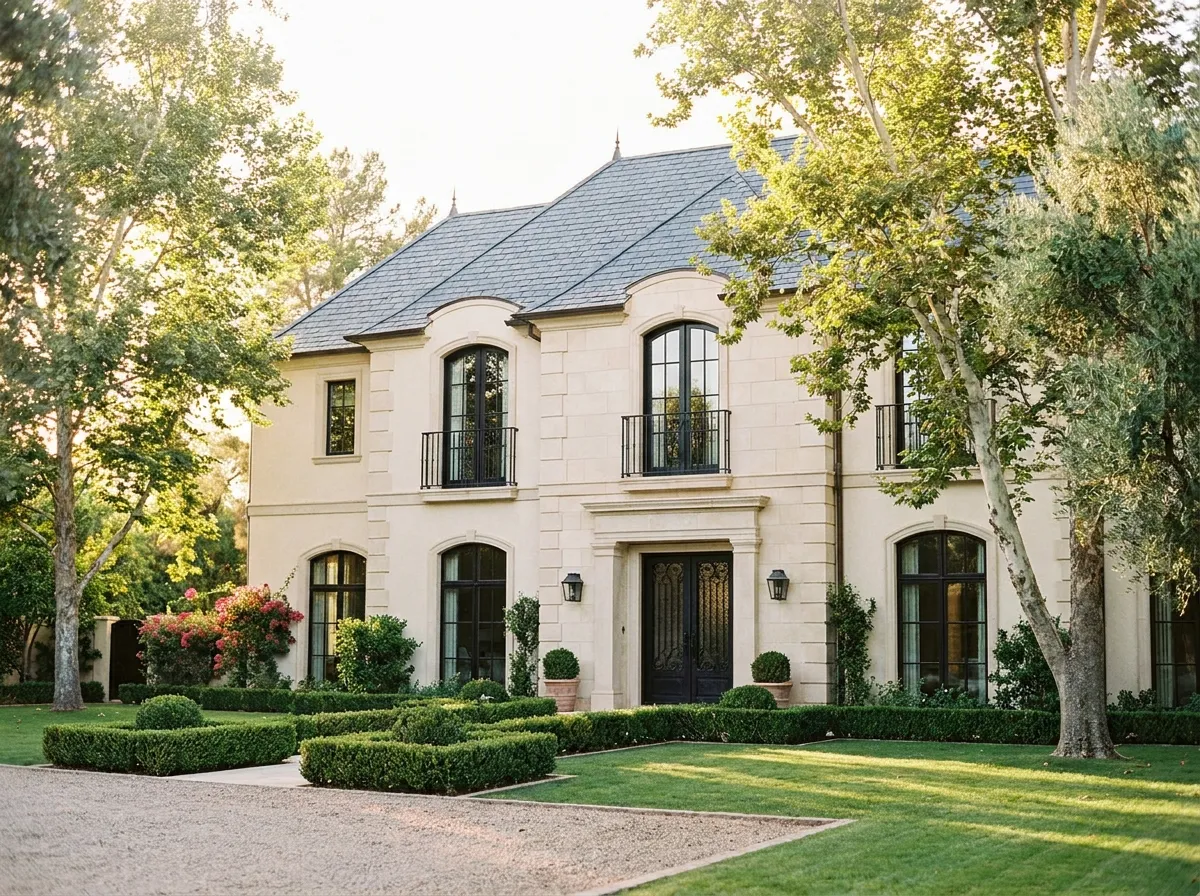
Arcadia is 9.2 square miles of 1950s ranch homes sitting on some of the most valuable land in metropolitan Phoenix. The comp ceiling — what a fully renovated Arcadia home sells for — runs $580-$640 per square foot. The construction floor — what it costs to build the renovation — runs $350 per square foot. That $230 spread is the reason renovation math in Arcadia is unlike renovation math almost anywhere else in Arizona.
This guide is organized around the four renovation types that consistently generate positive equity outcomes in this submarket, with cost ranges and ARV math for each, the permit timeline specific to 85018 and its neighboring zips, and a framework for choosing the financing path before you hire an architect. The stay-vs-move math — the full financial comparison against selling and trading up — is covered separately in the stay-or-move piece. This piece focuses on the renovation itself.
Why Arcadia renovation math works differently
Three conditions have to be true for renovation to make more financial sense than selling. The housing stock has to be worth renovating — old enough to be underbuilt relative to the lot, but in a location with a real comp ceiling. The gap between unrenovated and post-renovation value has to be wide enough to pay for the work and generate net equity above it. And financing products have to exist to fund the project on terms that make the math work.
Arcadia — specifically 85018 and its neighboring zips 85016, 85251, and 85257 — satisfies all three conditions better than any other Phoenix submarket [1]. The housing stock is predominantly 1,400-2,200 square-foot 1950s ranch construction on irrigated 7,500-11,000 square-foot lots with aging kitchens, original baths, and no primary suite. The lot character — tall citrus, grass lawns, mulberry canopy — cannot be replicated on a new infill lot in North Scottsdale. And the post-renovation comp ceiling, for homes in the 2,200-2,800 square-foot range, runs $580-$640 per square foot per ARMLS closings in Q1 2026 [2].
The ceiling is real but it is not infinite. The Arcadia home value ceiling analyzer pulls current comp data for your specific address and proposed scope — it is the fastest way to establish whether the ARV math works before you spend money on an architect.
The four renovation types that work in Arcadia
Not every renovation makes sense in every house. Arcadia's post-tension slabs, setback constraints, and deed restrictions in certain sections create specific project shapes that work and ones that don't. Here are the four types with the highest frequency and best financial outcome in this submarket, in rough order of scope.
1. Kitchen and primary suite renovation (no addition)
The most common Arcadia project. The original 1950s homes had kitchens in the 140-200 square-foot range and a primary bedroom that was functionally a second standard bedroom. Modernizing both, without adding square footage, moves the home into a different comp tier and dramatically affects its livability for the family using it.
Typical scope: gut the kitchen (new layout, plumbing rough-in, finishes throughout); convert an adjacent bedroom and hallway into a combined primary suite with walk-in closet and en-suite bath with double vanity and walk-in shower. No addition, but City of Phoenix permits are still required for plumbing relocation, bearing wall removal if applicable, and electrical upgrades.
| Line item | Typical range | Notes |
|---|---|---|
| Kitchen gut (150-200 sqft, full scope) | $115,000–$175,000 | Demo, plumbing relocation, panel upgrade if needed, mid-to-high finishes; 2026 Phoenix labor rates [4] |
| Primary suite within existing footprint | $80,000–$135,000 | Bath rough-in, tile, fixtures, closet system, HVAC extension |
| Architectural + permitting (City of Phoenix) | $18,000–$26,000 | Stamped plans, structural if bearing walls touched, permit fee ~2.5% valuation + $1,500 base [5] |
| Contingency (Arcadia 1950s minimum) | $21,000–$31,000 | 10-15% floor — unforeseen conditions in 1950s slabs and plumbing are routine, not unusual |
| Total | $234,000–$367,000 | |
| Typical ARV uplift | +$170,000–$270,000 | Renovated comps in 85018 trade at $580-$640/sqft vs $430-$475/sqft unrenovated [2] |
2. Primary suite addition (500-650 sqft)
The second-most-common scope: an addition off the rear of the house adding a primary suite — bedroom, en-suite bath, walk-in closet, often a sitting room. The master suite cost breakdown walks through this scope in full line-item detail, so this is the summary.
The critical pre-check before designing this scope: rear setback. City of Phoenix requires a 25-foot rear setback on most R-6-zoned Arcadia lots and a 5-foot minimum side setback [7]. Many 7,500-square-foot lots in the neighborhood have limited rear depth once this is accounted for. Survey the buildable envelope against the parcel dimensions from the Maricopa County Assessor before your architect starts — not after the plans come back. A last-minute setback correction on a permitted plan set costs 2-4 weeks and an additional $2,000-$5,000 in architectural fees.
3. ADU / casita (detached, 600-1,000 sqft)
A detached accessory dwelling unit on an Arcadia lot serves two purposes simultaneously: it adds 600-1,000 square feet of living area, and it captures the most favorable ADU regulatory window in City of Phoenix history. Phoenix City Council voted 8-1 in 2024 to expand ADU rights across all R1-R3 residential zones [8].
On lots under 10,000 square feet — which is most of Arcadia — the maximum ADU size is 1,000 square feet. ADUs require the same setbacks as primary structures (25 feet rear, 5 feet side) and connection to existing utility services. ADUs may be rented long-term and, as of the 2024 City Council ruling, may also be used as short-term rentals, reversing the prior prohibition [8].
Construction cost for a detached casita in 85018 runs $150-$220 per square foot for new construction at ADU scale. An 800-square-foot casita costs $120,000-$176,000 in construction plus $25,000-$38,000 in soft costs and utility connections. The ARV contribution of a permitted ADU on an Arcadia lot: $175,000-$240,000 in added property value, per ARMLS comps showing parcels with legal casitas at a significant premium over comparable lots without [9]. Detailed treatment in the 84 Phoenix ADU permits piece.
4. Full gut and build-out (1,800-3,000 sqft post-renovation)
The highest-cost, highest-upside project: a full renovation that touches every system — electrical, plumbing, HVAC — combined with an addition bringing a 1,500-1,800 square-foot original home to 2,400-3,000 square feet. Full gut cost in 85018 runs $380-$420 per square foot on the renovation portion; addition cost runs $340-$370 per square foot [4].
ARV for a fully renovated 2,400-2,600 square-foot Arcadia home in 2026: $1.40M-$1.72M per ARMLS comps [2]. Against a current as-is value of $1.1M-$1.3M and a $450K-$650K renovation budget, the manufactured equity is $150,000-$370,000 above project cost. This scope almost always requires an ARV-based construction loan — the renovation cost typically exceeds what a HELOC can draw against current equity alone.
The full financial case for this scope is in the stay-or-move math piece. The all-in cost of trading up versus the full-gut renovation path: a roughly $600,000 five-year gap in favor of staying, at current rate levels.
Permits and the City of Phoenix process
All four project types require City of Phoenix permits. The mechanics — and the specific points where renovation timelines slip — are covered in detail in the Bell Bank loan close piece. The summary for Arcadia:
- Structural addition permit: Plan review at City of Phoenix runs 6-10 weeks for a first submission. A first-submission comment cycle — which most first submissions receive — adds 2-3 weeks. The most common first comment in 85018 is a setback issue. Verify the buildable envelope before the architect draws.
- Kitchen/bath-only renovation (no addition): Qualifies for the City's over-the-counter express permit track in most cases. Issues within 1-2 weeks [10]. This is a meaningful scheduling advantage if your scope is renovation-only.
- ADU permit: Separate from the primary structure permit. Runs on the same 6-10 week review timeline as an addition.
- Arcadia HOA check: Most of 85018 and 85016 is not governed by a mandatory HOA. However, sections of Arcadia Proper have deed restrictions that limit exterior modifications and, in some cases, additions. Check the title report before finalizing the design — a deed restriction violation discovered after plan submission wastes architect fees.
- Post-tension slab disclosure: Arcadia's 1950s homes were among the first widespread uses of post-tension slab construction in Phoenix. The structural engineer on your plan set must account for the existing cable layout before specifying penetrations. Most lenders' appraisers will flag this as a risk factor if the plans don't address it.
Which financing path fits your scope
The renovation financing decision has a larger financial impact than the contractor selection for most Arcadia homeowners. Choosing the wrong product can cost $50,000-$150,000 in unnecessary interest or forfeited mortgage-rate value. The framework below matches product to scope size.
| Project budget | Best fit | Why |
|---|---|---|
| Under $150K | HELOC from AZ credit union | Simple, fast, available if you have equity. Variable rate is the tradeoff. Arizona Federal, Desert Financial, OneAZ: 7.24-7.99% intro, indexed to prime [11]. |
| $150K–$300K | HELOC if equity supports; ARV loan if tight | If current equity covers the draw, HELOC works. If the renovation pushes past available equity or you want a fixed rate, ARV construction loan is the better product. |
| $300K–$2M | ARV-based construction loan (Two-Time Close) | Sized against after-repair value. Keeps your existing first mortgage intact. More process — but the right tool for this budget. Bell Bank, Western Alliance, and private banks are the main AZ options [12]. |
| Cash-out refinance | Almost never right in 2026 | Replaces your existing mortgage with a new one at current rates (~6.5%). If you have a sub-5% first mortgage, you're destroying significant financial value. Only consider if current rate is already above 5.5%. |
For the full worked comparison of these paths on a specific Arcadia comp — with 5-year cost modeling — see the stay-or-move math piece.
For a detailed walkthrough of how an ARV construction loan actually closes — every document, every timeline step, where projects slip — see Inside the Renovation Loan Close.
What to look for in an Arcadia contractor
The contractor question in Arcadia gets conflated with the design question more than it should. Most homeowners come in having already selected a contractor based on a portfolio or a neighbor referral, and ask for help with financing afterward. Most of those contractors are competent on trade execution and underqualified on two things: permit-ready documentation and Arcadia-specific cost reality.
The second-most-common reason Arcadia renovations go sideways is an initial bid that didn't account for conditions that routinely appear in 1950s-era post-tension slabs: deteriorated original plumbing, undersized electrical panels, insulation conditions requiring remediation to pass the 2024 Phoenix energy code, and bearing walls in locations the original plan showed as non-structural [13].
The minimum documentation any contractor should produce before you sign a contract for a project in this size range:
- ROC license verification: Confirm the license class matches the scope (Class B for residential general contracting). Verify at roc.az.gov [14].
- Certificate of insurance: You named as additionally insured, $1M minimum general liability. Ask for the certificate directly from the insurer, not a copy from the contractor.
- AIA G702-format budget: Required for any lender-financed project. A line-item schedule of values in the 16 CSI divisions. If the contractor has only ever done cash-paid projects, they may not have this format — which tells you something about their lender-project experience.
- Three verifiable references from comparable-scope Arcadia or similar-submarket projects. Call them. Ask specifically: were there unforeseen conditions? How did the contractor handle them? Did the final cost match the original bid within 15%?
For the full breakdown of where Arcadia projects fail — and the documentation and process steps that prevent each failure mode — see Where Renovations Go Wrong in Arcadia.
Where to start
If you're trying to establish whether the renovation math works for your specific address before talking to anyone, the Arcadia home value ceiling analyzer runs the current comp ceiling and an ARV estimate against your address and stated scope. It's the fastest way to confirm whether the project is financially sound before you spend money on an architect.
If your home is in North Central Phoenix (85020) rather than Arcadia proper, the 85020 ceiling analyzer has the comp data for that submarket. For Paradise Valley (85253), see the Paradise Valley ceiling analyzer.
The Reality Check tool is the next step if you want the full picture: scope, cost estimate, ARV projection, financing path, and a feasibility grid. It runs in about two minutes and generates the same parameters we use when presenting a project to a lender. No email required to see the results.