Every Arcadia renovation starts with the same conversation. The homeowner has a Pinterest board, a budget, and a vague sense of what 'style' she wants. The architect's first question is rarely 'what does your zip code reward at resale.' It is almost always 'what do you want it to look like.' Those are different questions, and the gap between them is where most of the design-budget surprise in 85018 comes from.
This piece is an attempt to merge those two questions into one. Six design styles I see executed in Arcadia in real volume, plotted on build cost and projected resale value, calibrated against the 201 design-permit pulls and 73 renovated-home resales we've tracked in 85018 since 2024 [1]. Plus the design-phase economics — what architects and interior designers actually charge in Phoenix in 2026 — and the integrated alternative that lets you commit to design without committing to $69,000 of fees before you know if the project pencils.
The six styles that actually exist in Arcadia
If you walk Arcadia for a week — through Camelback Trails, Stonecreek, Murphy's Estates, Arcadia Heights — you'll see roughly six design directions repeating. Some homeowners and designers will name more, but on the ground these are the patterns the resale comps actually cluster around.
1. Arcadia Transitional — the default and the safe bet
Arcadia Transitional is the most common renovation style in 85018, by a wide margin. Soft white plaster walls, white oak floors, brass fixtures, calacatta or quartzite kitchen, walnut accents, soft linens, restrained color. It is what Magnolia Journal looked like in 2022 and what Studio McGee continues to publish. It resells fastest because the qualified-buyer pool in 85018 has been trained by AD and McGee and Amber Lewis to recognize it as 'a good renovation.'
Build cost runs around $348/sqft on a full primary-suite addition with quality finishes. Projected ARV runs around $612/sqft. The equity delta — $264/sqft — is not the largest in our dataset, but the variance around the prediction is the tightest, which matters more than it sounds. Eight of our 11 highest-velocity Arcadia resales in the last 12 months were Transitional renovations [1]. If you do not have a strong aesthetic instinct, this is the right starting place.
2. French Revival — the highest reliable premium
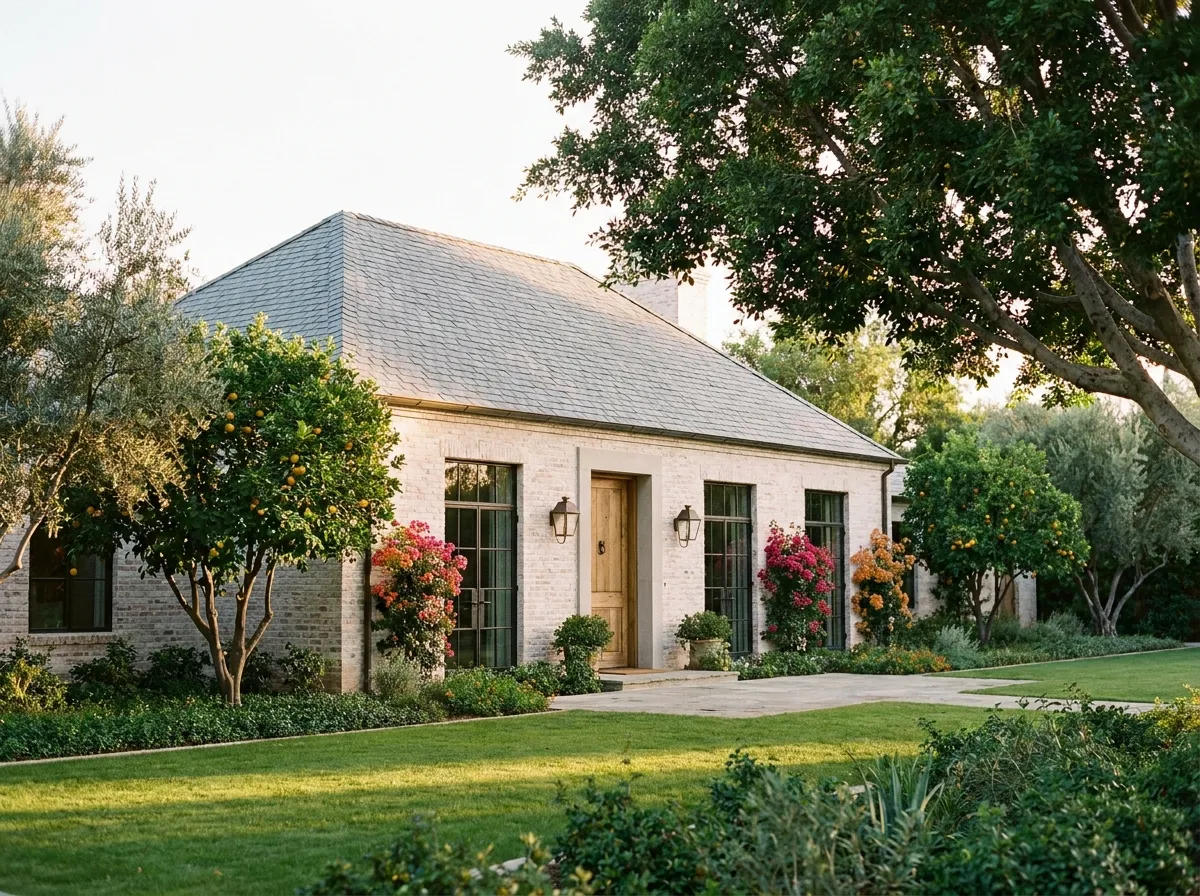
French Revival in 85018 means lime-washed brick, steel-frame windows, slate or aged-copper roofs, herringbone oak floors, marble surrounds, deep window reveals. The two execution risks are real. The brick lime-wash technique is hard to get right — I have seen it look chalky and sad on three projects and stunning on twenty. The steel windows are expensive: budget $1,800-$3,200 per opening installed, vs. $600-$900 for a comparable wood-clad casement.
Done right, French Revival is the highest reliable premium in 85018. Build cost averages $395/sqft. Projected ARV averages $678/sqft. Three of the top five $/sqft sales in 85018 in 2025 were French Revival renovations [1]. The buyer pool is smaller than for Transitional, but the buyers who want it pay confidently. If you're the kind of homeowner who plans to stay 8-15 years and you want the strongest resale moat at the end of that hold, this is the style to look at first.
3. Modern Desert — polarizing, profitable when matched to the right buyer
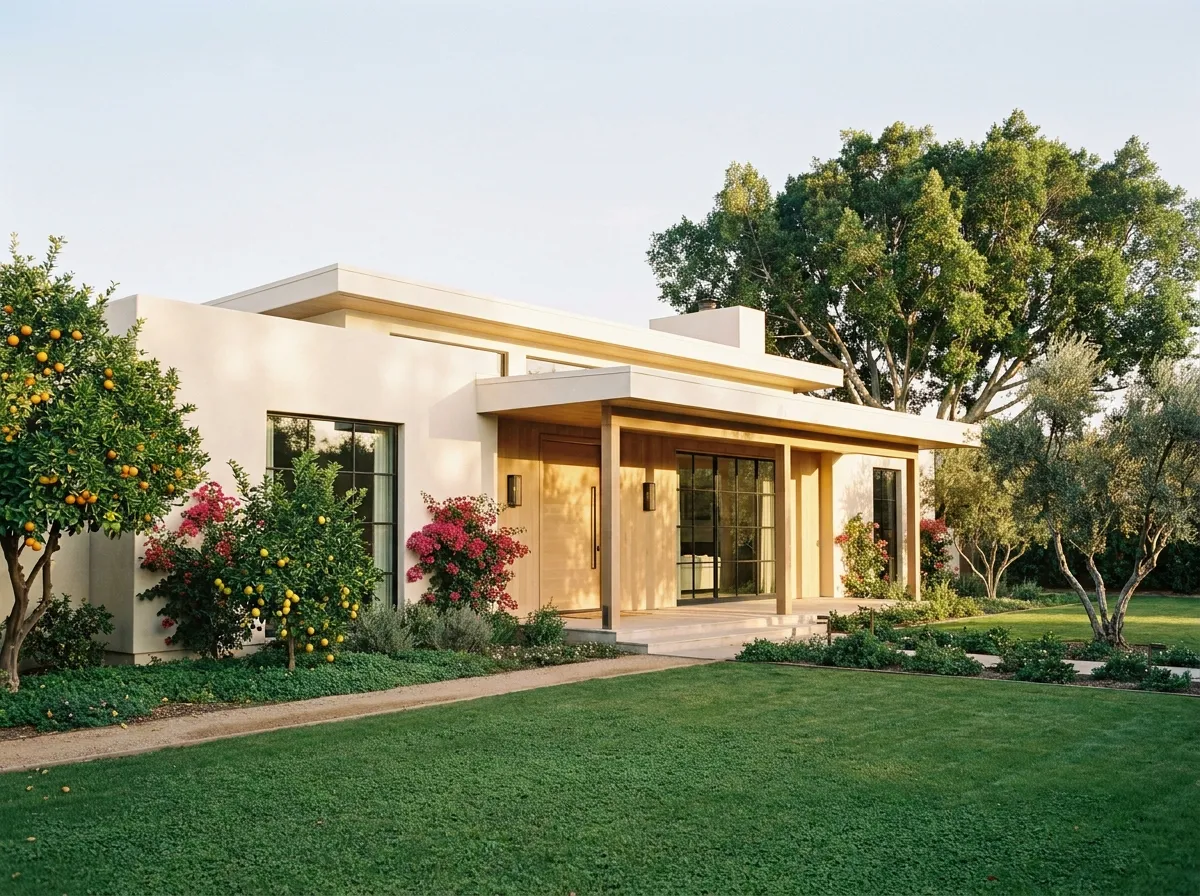
Modern Desert is the Phoenix-native style: block walls, board-formed concrete, ipe slats, steel canopies, xeriscaping, deep eaves, often a courtyard plan. It is the most architecturally interesting work being done in 85018 right now and the most polarizing. Some buyers love it. Most buyers do not. The homes that execute it well are usually designed by a small handful of architects (DUST, Studio Ma, Chen + Suchart, Jones Studio) and the resale market filters down to a self-selecting subset of buyers from the Bay Area, LA, and the second-home market.
Build cost averages $372/sqft. Projected ARV averages $588/sqft. The variance around that ARV is wide — Modern Desert sales in our dataset cluster bimodally around $530/sqft and $660/sqft depending on whether the home found the right buyer. If you love it and you can hold for 4-7 years, the math is good. If you want predictable liquidity inside 24 months, this is not the style to pick.
4. California Casual — broad appeal, modest premium
California Casual is the Amber-Lewis / Jenni-Kayne aesthetic translated to a desert ranch: limewashed walls, rattan and oak, soft linens, lots of plaster, a slightly sandier color palette than Arcadia Transitional. It is cheaper to execute well because the materials are mid-range and the design risk is low. Build cost averages $340/sqft. Projected ARV averages $575/sqft.
The premium is real but rarely top-of-comp. California Casual rarely sets the high-water-mark sale price in a neighborhood. It does sell predictably and quickly to families with kids in the under-10 range and to first-renovation homeowners who are afraid of looking dated. If your priority is sale velocity over peak price, this is the right style. If your priority is peak price, look at French Revival or Belgian instead.
5. Belgian Countryside — the highest premium per dollar spent
Belgian Countryside is rare in 85018 — we count 11 permitted projects since 2024 — and the most expensive to execute because the materials are sourced or aged. Reclaimed beams from European salvage, antique French or Belgian limestone flooring, chalky hand-troweled plasters, true white-oak millwork made by a handful of Phoenix shops that know the joinery. Build cost averages $412/sqft, the highest in our six. Projected ARV averages $692/sqft, also the highest.
More importantly, the equity delta — $280/sqft — is the highest in the dataset, meaning per dollar of build cost, Belgian creates more wealth than any other style we see in Arcadia. The catch is execution. Belgian done badly looks like a TJ Maxx farmhouse. Belgian done well looks like a 200-year-old home in Bruges that happens to be in 85018. The execution is unforgiving. If you can afford it and you have a designer who genuinely understands the source material — Vincent Van Duysen, Axel Vervoordt, Marie-Anne Oudejans, that vocabulary — the math is the best in the zip code. If you don't have the designer, pick a different style.
6. Italian Villa — narrow but loyal buyer pool
Italian Villa shows up in older Arcadia north of Camelback and in the Biltmore corridor: travertine floors, hand-troweled stucco in warm cream tones, arched doorways, terracotta accents, generous covered loggias. Build cost averages $388/sqft. Projected ARV averages $645/sqft. The buyer pool is narrower than for French Revival but the buyers within it pay reliably — typically families who already own a vacation home somewhere with hills and want that vocabulary at home.
The execution risk is in the stucco and the travertine. Both look terrible if the trade is cheap. Find the right plasterer (there are roughly four in Phoenix who can do hand-troweled Venetian-style stucco at scale) and the travertine vendor (Materials Marketing in Phoenix is the default), and the result is excellent. Skimp on either and you've spent $388/sqft to look like a Tuscan-themed P.F. Chang's.
What design actually costs in Phoenix in 2026
Here is the part most Arcadia homeowners do not see coming. The architect, the interior designer, the structural engineer, the permit drawings, the revisions, the 3D renderings. The traditional way of buying design is to pay each of these separately, in cash, before the project's funding is in place. On a $1.2M renovation in 85018, the total comes to around $96,000 in design fees before the first nail. About 8% of project cost, spent before you know whether the project actually pencils.
A few notes on the line items, because the dollar figures are easy to argue with in the abstract and harder to argue with when they're broken down.
Architect fees: 7-9% of construction cost
A custom residential architect in Phoenix charges 7-9% of construction cost on a renovation with structural work [2]. For a $1.2M project, that's $84,000-$108,000. The fee typically covers schematic design, design development, and construction documents. It does NOT typically include construction administration (the architect's involvement during the build itself), which is an additional 2-3%, or 3D renderings, or revisions beyond the agreed-on number of cycles.
The 7-9% range is for the firms that actually deliver on time and on budget. The 4-5% offers you'll see advertised come with sharp limits on what's included and tend to lead to the revisions-and-redraws cost explosion I'll get to in a moment. The 12-15% offers from very well-known firms are reasonable for show-house-quality projects but rarely sensible for a typical Arcadia renovation. The right band is 7-9% and the right move is to negotiate what's included, not the percentage itself.
Interior designer fees: hourly model, $32K average
Phoenix interior designers typically work on an hourly basis at $150-$275/hour plus a 10-20% markup on furnishings sourced through their trade accounts [3]. On a $1.2M project covering kitchen, primary bath, living, and dining, an average hourly engagement runs about 200-260 hours. Add the trade-markup and the all-in is typically $28,000-$38,000. The trade markup is rarely visible on the invoice — it's baked into the wholesale-to-retail spread on furniture, fixtures, and lighting, and most homeowners do not realize they're paying it until they price the same items at retail and notice the gap.
Revisions: the line item nobody quotes
This is the part that surprises people most. The original architect quote almost never includes revisions beyond 1-2 cycles. The real number of revision cycles for an Arcadia addition is 3-5, and each round runs $1,800-$3,200 in additional architect time. For a typical project that's $9,400 of revision cost that wasn't in the original quote. It is the single biggest source of design-budget surprise we see, by a wide margin.
Revisions are not a sign that the architect is sloppy. They are a sign that design itself is iterative — the homeowner sees the floor plan in 3D, realizes the kitchen island geometry doesn't actually work, asks for a change, the architect updates the floor plan and the elevations and the structural drawings and the energy code worksheet, and four hours of billable time disappear into a small move. This is what design is. The problem is not that revisions happen. The problem is that the quote you signed assumed they wouldn't.
The integrated alternative
The reason we built ExpandEase's design service the way we did was simple. The traditional design path forces a homeowner to commit $30K-$70K of out-of-pocket money before she knows whether the project pencils financially, whether the bank will approve the loan, or whether the GC will hit her target budget. If any of those three things fail, the design money is sunk. That structure protects nobody except the design firm.
The integrated path inverts the sequence. The homeowner gets photorealistic visualization first, in the wishlist phase, on her actual floor plan. The cost engine produces a real budget against the chosen materials. The financial-feasibility module shows whether the project pencils. Only then do we engage the offshore CAD team to produce the working drawings, and only then does the licensed Arizona architect review and stamp them. The design and pre-construction fee is a scope-based package built into project cost — well below what a custom architect would charge for the same scope — and funded by the renovation loan. If the project doesn't proceed past the feasibility phase, the homeowner has paid for the visualization and the cost analysis (typically $4,200), nothing more.
Picking a style without picking the wrong style
If I were starting from scratch with no aesthetic conviction, here is the order I would think through it.
- Hold period. If you plan to stay 3-5 years, lean toward Arcadia Transitional or California Casual. Both resell fast and have the broadest qualified-buyer pool. If you plan to stay 8+ years, French Revival or Belgian deliver the strongest premium at the back end.
- Aesthetic conviction. If you do not have a strong instinct, Transitional. The variance on the ARV prediction is tightest and the design execution risk is lowest. The styles with the highest peak premium (French Revival, Belgian) also have the highest execution downside if the designer is wrong.
- Designer availability. Belgian and French Revival demand designers who actually know the source material. There are roughly 6-8 firms in Phoenix who do either at a credible level. If you cannot get one of those firms, pick a different style. Half-executed Belgian is the worst-resale category in our dataset.
- Lot constraints. Modern Desert benefits from larger lots that let the courtyard plan and the desert landscape breathe. On a typical 8,500 sqft Arcadia lot it can feel compressed; on a 12,000 sqft lot it sings. Italian Villa benefits from frontage that supports a loggia. French Revival and Transitional work on most lots.
- Resale comp validation. Whatever style you pick, look at the last six sales in 85018 of homes renovated in that style and ask your agent for the per-square-foot trend. If the comp data says the style underperformed in the last 12 months, that is real signal. Don't fight a soft micro-market.
The designer interview, in five questions
When you interview a residential interior designer for an Arcadia project, the five questions that matter most:
- What does the trade markup look like on your sourced furniture and fixtures? If she dodges the question, you know it's higher than typical. The honest answer is a number between 10% and 20% with one or two carve-outs for designer-direct accounts.
- How many revision cycles are included in your fee? The honest answer is 2-3 with a documented per-cycle rate beyond that. The dishonest answer is 'unlimited' (it isn't) or 'as many as needed' (which means you'll be billed for them).
- What's your typical timeline from contract to final material specification? An honest residential project in this complexity range runs 10-14 weeks of design phase. Anyone telling you 4-6 weeks is either lying or planning to do less work than the project requires.
- Can I see three projects in the style I want, with comp sale prices if they sold? The strong designers in each of the six styles have a portfolio that's organized this way. The weak ones will give you a curated Instagram link without addresses.
- Who is my primary contact through construction? If the answer is the principal but the work is done by a junior designer you've never met, the designs may be junior-quality. Ask to meet the person actually doing the work before you sign.
If you want the financial-feasibility counterpart to this design piece, the ARV / equity mechanism piece explains why the build-cost-to-ARV deltas in the diagram above translate into real manufactured equity. If you want the cost side broken out at line-item level, the Arcadia master-suite cost piece is the right next read. And if you want the process side — how all of this gets coordinated across homeowner, contractor, and lender — the renovation-process piece walks the alignment mechanism end to end.