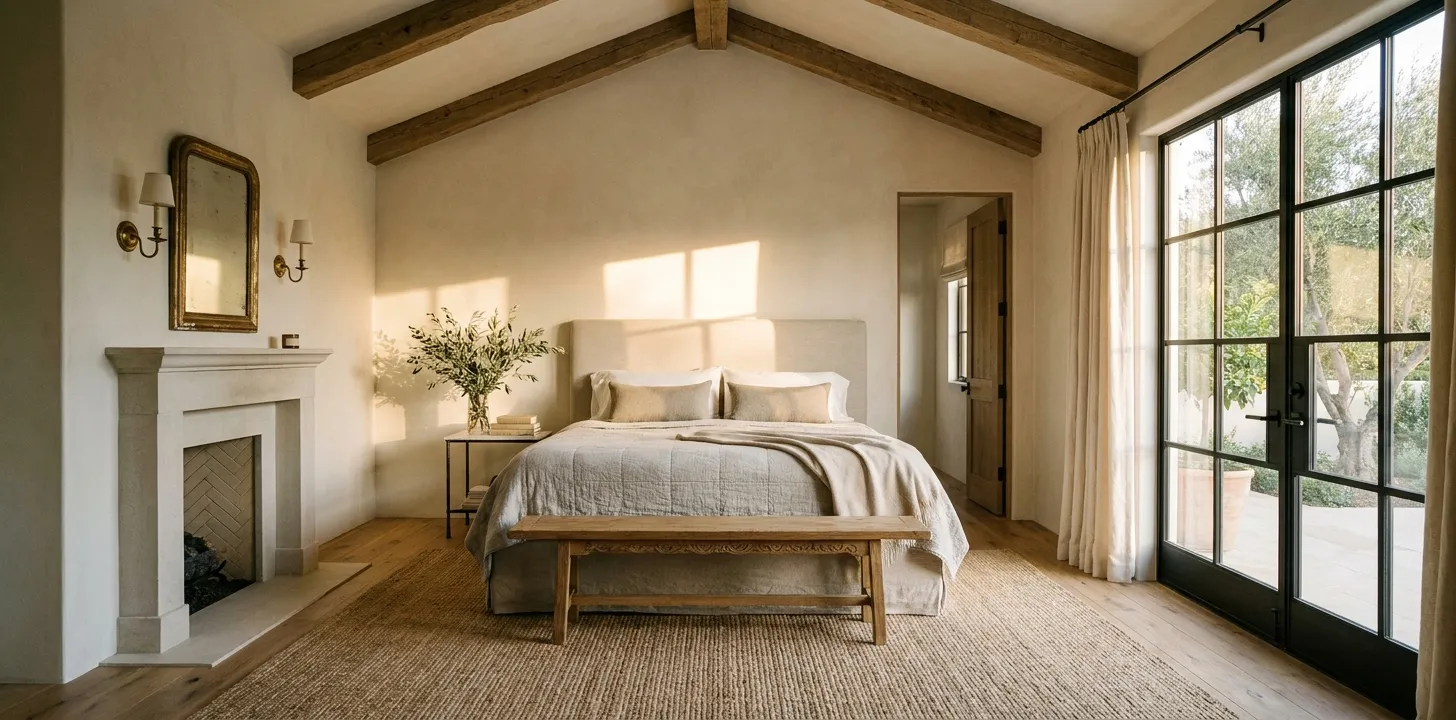
If you have been collecting Pinterest pins for a year and quoting bathroom budgets to your spouse over dinner, this piece is written for you. A real Arcadia primary bathroom renovation in 2026 lands somewhere between $80,000 and $220,000 depending on layout, footprint, and material tier. Across the 47 renovated homes in our resale dataset, the median project cost $128,000 and added roughly $96,000 to assessed after-repair value [1]. That is 75% direct recovery on the room itself, plus a real halo across the rest of the house.
The bathroom is the room where Arcadia buyers spend the longest at the second showing. Real estate agents I have spoken with name it as the deciding room more often than the kitchen. A kitchen can be reworked later for a known cost. A primary bathroom built into the wrong footprint costs twice as much to fix as it did to build. The decisions made on day one of design are the ones the homeowner lives with for ten to fifteen years. This piece is about getting those decisions right.
Two notes before we begin. Every cost and resale figure below is 85018-specific. A primary bathroom in Paradise Valley or Silverleaf carries a different price band, a different material vocabulary, and a different buyer expectation. All dollar figures are 2026 Phoenix labor and materials. The cost engine refreshes annually and this piece updates with it.
The four primary bathroom layouts that exist in Arcadia
Of the 132 primary-bath-scope permits we tracked in 85018 since 2024, roughly 92% fit one of four layout patterns. Designers will name more than four because they have to differentiate from each other. On the ground, the four below cover almost every Arcadia primary bath you will see permitted and finished.
A few things in the data are worth pausing on. The double-vanity with separate shower and tub is the Arcadia median by a wide margin at 46% of permits. It is also the layout that resells most predictably, because it matches what qualified 85018 buyers are looking for in a refreshed mid-century ranch. The wet-room is driving the top of the 2025-2026 Arcadia resale comp set. Six homes with a true open wet-room primary sold at 6-11% above their otherwise-comparable peers in the last fourteen months [1]. The spa suite is the only layout in our dataset where the median renovation beat the comp set in absolute dollars added, with one important caveat about bedroom count that comes next.
The bedroom-count question
Before we get to materials, the layout question homeowners most often get wrong is where the extra square footage comes from. A spa-suite primary needs roughly 180-260 sqft. The original Arcadia ranch primary is typically 60-95 sqft. That 100-160 sqft delta has to come from somewhere: an adjacent secondary bedroom, a hallway closet, or a small addition.
The trap is absorbing an adjacent bedroom, which drops the home from a 4-bed to a 3-bed. The 85018 resale comp set for 3-bed renovated homes is meaningfully thinner than for 4-bed. ARMLS data from 2024-2026 shows 4-bed renovated Arcadia homes selling at $605/sqft median; 3-bed renovated homes at $568/sqft median [4]. On a 2,200 sqft home, that is an $81K resale gap. Larger than the ARV signal of the spa suite itself.
There are three ways to stay out of the trap. The first is to absorb space from a non-bedroom source: an oversized hallway closet, an underused breakfast nook, a wedge of garage. The second is to add a small bump-out addition of 40-100 sqft at $35K-$95K all-in to capture the spa-suite footprint without reducing bedroom count. The third is to step the layout down to a wet-room, which fits in the existing footprint of most Arcadia 4-bed plans without touching a bedroom wall. For almost every 4-bed Arcadia home, options two and three are the right calls. The first option is fine on 5-bed homes where dropping to 4-bed still keeps the home inside the qualified-buyer pool.
The material hierarchy: seven categories, three tiers each
Once the layout is locked, the budget is mostly the sum of seven material choices. The categories do not move in lockstep. A luxe-tier plumbing package with mid-tier tile and entry-tier vanity hardware is a defensible build, and the one I would recommend for most Arcadia primary baths in the $100K-$160K range.
| Category | Entry tier | Mid tier | Luxe tier | Spend or save |
|---|---|---|---|---|
| Vanity (cabinetry + counter) | $3.5K–$6K (Decora semi-custom) | $8K–$16K (Element CW inset) | $22K–$48K (full custom oak / walnut) | Spend |
| Plumbing fixtures (faucet, shower, tub filler) | $1.8K–$3K (Kohler Purist) | $4K–$7K (Brizo Litze) | $10K–$22K (Waterworks Henry, unlacquered brass) | Spend |
| Tile / stone (floor + walls + shower) | $4K–$8K (porcelain, Bedrosians) | $10K–$20K (Cle Zellige or honed marble) | $28K–$55K (slab feature wall + book-matched marble) | Mid is enough |
| Shower glass + steel | $2K–$4K (frameless 3/8") | $5.5K–$9K (steel-and-glass enclosure) | $14K–$24K (custom steel surround) | Spend if wet-room |
| Tub | $1.5K–$3K (Kohler alcove) | $4K–$7K (Victoria + Albert freestanding) | $10K–$18K (Waterworks Empire / Drummonds) | Save |
| Lighting + mirror | $1.5K–$3K (Pottery Barn / Rejuvenation) | $3.5K–$7K (Visual Comfort + custom mirror) | $9K–$18K (Apparatus / Allied Maker) | Spend |
| Cabinet hardware + accessories | $400–$900 (Rejuvenation) | $1.2K–$2.5K (Hardware Renaissance) | $3.5K–$7K (Sun Valley Bronze) | Spend |
Vendor names are real Phoenix trade accounts. Mention them by name when you interview designers; the question list at the bottom of this piece tells you what to do with the answers.
Three categories return the most resale per marginal dollar in our data: vanity, plumbing fixtures, and lighting. The reason is consistent. Each is something a buyer can see, touch, or judge in the first 30 seconds of the second showing. The vanity is the largest furniture-scale object in the room and the piece a buyer photographs. The faucet and shower fixtures register the moment a buyer turns the handle. The lighting registers in every listing photograph the agent uploads. Bad bathroom lighting is the single fastest way to undercut every other dollar in the room.
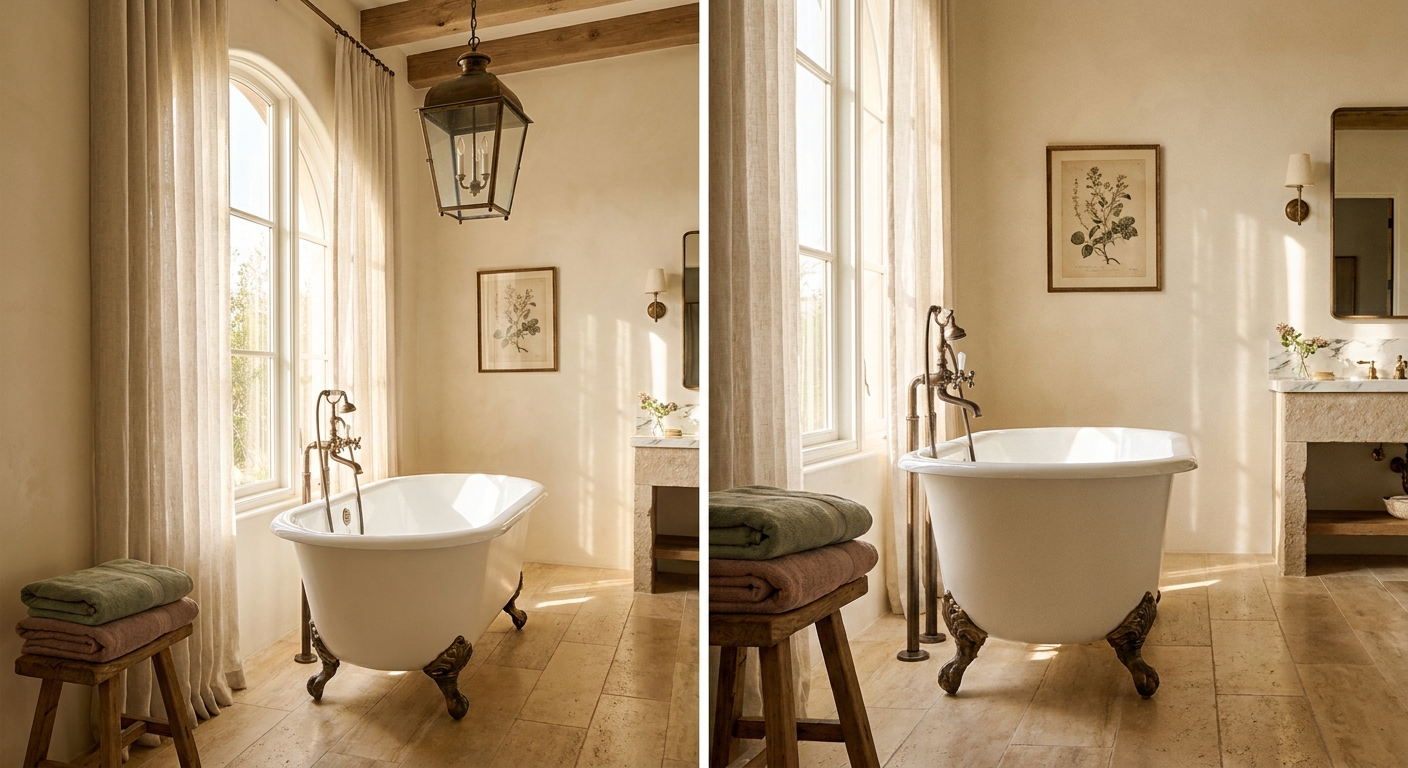
The category where the data tells me to save hardest is the tub. The freestanding tub is non-negotiable for the wet-room and spa-suite layouts; Arcadia buyers expect it. Which specific tub matters less than designers want you to believe. A $4,200 Victoria + Albert Barcelona reads in photographs and resells identically to a $14,800 Waterworks Empire in our comp data. Buy the Waterworks if you want to live with it. Do not buy it as an ARV play. Same logic for the alcove tub in compact layouts. A $1,800 Kohler with a tile surround reads as new and clean. The marginal $4K to upgrade to a cast iron specialty tub does not show up in 85018 comps.
Tile is where designers most often push homeowners into luxe-tier when mid-tier returns the same. A handmade Cle Zellige in the shower with a honed Carrara floor reads as expensive and resells at the top of the comp set. A slab feature wall with book-matched marble looks beautiful and adds $18K-$30K of material and labor that does not show up at resale. The slab move is a personal-use decision, not a financial one.
Three real budgets
Three real Arcadia primary bathroom budgets from 2025 projects, all closed, all renovated, all with primary bath in scope. Names changed. Numbers are total bathroom cost including labor, design fees attributable to the bathroom, finishes, and permits. They do not include structural work for adjacent rooms.
| Line item | $80K bath (double-vanity refresh) | $140K bath (wet-room) | $220K bath (spa suite) |
|---|---|---|---|
| Vanity (cabinetry + counter) | $11,200 (semi-custom Decora, quartz) | $22,400 (semi-custom inset, quartzite) | $48,500 (full-custom oak, marble + waterfall) |
| Plumbing fixtures | $3,400 (Kohler Purist) | $6,800 (Brizo Litze, polished nickel) | $18,400 (Waterworks Henry, unlacquered brass) |
| Tile + stone | $6,200 (porcelain field + accent) | $13,800 (Cle Zellige + honed marble floor) | $36,000 (slab feature wall + book-matched marble) |
| Shower glass + steel | $2,400 (frameless 3/8") | $8,200 (steel-and-glass wet-room enclosure) | $18,400 (custom steel surround) |
| Tub | $2,200 (Kohler alcove + tile surround) | $5,400 (Victoria + Albert Barcelona) | $12,800 (Waterworks Empire) |
| Lighting + mirror | $2,800 (Visual Comfort + custom mirror) | $5,600 (Visual Comfort + Mitzi) | $14,200 (Apparatus pendants + custom mirrors) |
| Hardware + accessories | $1,400 (Rejuvenation) | $2,400 (Hardware Renaissance) | $6,200 (Sun Valley Bronze) |
| Labor (demo, framing, install, finish) | $38,000 | $54,000 | $48,000 |
| Design fee (allocated to bathroom) | $6,800 | $11,200 | $15,400 |
| Permits, inspections, soft costs | $3,200 | $5,400 | $7,800 |
| **Total** | **$77,600** | **$135,200** | **$225,700** |
Totals match the headline numbers within rounding. Average change-order delta across the three projects: +8.4% of base budget, lower than the kitchen-playbook 12.5% because bathroom scope is more contained.
A few patterns jump out across the three budgets. Labor as a percentage of total cost shrinks as the budget grows. The $80K bath is 49% labor; the $220K bath is 21%. The labor hours are roughly similar; the higher-tier materials consume the rest of the budget. The hardware and accessories line, even on the spa suite, stays under 3% of total cost and is the single best ARV-per-dollar move in the room. The design fee allocated to the bathroom is consistent at roughly 8% of total cost across all three, slightly higher than the kitchen's 6% because the bathroom decisions compress into a smaller room with denser material selections.
Where I see homeowners overspend
Three patterns of overspending recur in projects that did not get the resale signal the homeowner expected.
- Slab feature walls. Book-matched marble or quartzite behind the freestanding tub at $18K-$30K reads as a personal-use luxury, not an ARV move. The same wall in Cle Zellige or honed marble field tile costs $3K-$6K and resells identically in 85018 comps.
- The Waterworks tub on the ARV justification. A $14K-$18K Waterworks Empire or Drummonds does not return its incremental cost over a $4K-$5K Victoria + Albert in any resale data we have. Buy it for the personal experience, not the investment.
- Full Toto or Duravit smart-toilet packages. A $4,800 Toto Neorest is a real upgrade to live with. The resale signal versus a $900 Toto Drake is near zero. Smart-toilet decisions belong in the personal-use budget, not the renovation ROI.
Where I see homeowners underspend
Three underspending patterns show up at the photograph stage and undercut every other dollar in the room.
- Builder-grade vanity lighting. Hollywood-bulb fixtures from a big-box store above a $22K vanity read as a different room than the one designed. The fix is $2,500-$5,500 in Visual Comfort or Mitzi sconces, plus an architect-spec mirror.
- The cheap shower head. An $89 chrome head on a $9,000 steel-and-glass enclosure tells a buyer the renovation cut corners where it counted. Even at the $80K bath tier, a $700-$1,200 Kohler Statement or Hansgrohe Raindance reads correctly and resells.
- Lazy hardware. Polished chrome knobs from a big-box store on an inset cabinet vanity is the fastest way to undercut a $20K+ vanity. The full hardware budget at mid-to-luxe tier is $1.5K-$5K. There is no good reason to save here.
The five questions to ask any bathroom designer
When you interview a designer specifically for an Arcadia primary bathroom, the five questions that separate the people who can deliver from the people who cannot.
- Can you show me three completed primary bathrooms in 85018 — not Scottsdale, not Paradise Valley — with the layout you would propose for me, and what those homes sold for if any have closed since? The Arcadia primary bathroom comp set has a specific material vocabulary. A designer who works mostly in Paradise Valley brings the wrong sense of what 85018 buyers expect.
- What is your trade-account roster for primary baths? You want to hear: Ferguson Designer for plumbing, Materials Marketing for stone, Bedrosians or Cle for tile, Element Cabinet Works or Cohen Cabinets for the vanity, and at least one boutique decorative-hardware source like Sun Valley Bronze. If the answer is mostly big-box accounts, the sourcing will be big-box.
- How do you handle the bedroom-count tradeoff if my layout requires absorbing space? A defensible answer names a specific path: bump-out to preserve bedroom count, absorb non-bedroom space first, or here is why dropping from 4-bed to 3-bed pencils given your resale comp set. A designer who has not thought about this tradeoff has not done the homework.
- What is the change-order protocol if I want to swap a material after demo? The honest answer is a written change order with re-priced line items signed within 48 hours, routed to the GC and the lender before the work happens. Anything more casual is a recipe for the mid-build cost surprise I wrote about in the renovation process piece.
- How do you bill — fixed fee, hourly, or hybrid — and what is the trade markup? A defensible Phoenix answer is one of two things. Twelve to fifteen percent of construction cost as a fixed fee with no markup, or hourly at $185-$285/hr with a disclosed 10-15% markup on furnishings. 'Designer-direct pricing' deserves the follow-up: meaning the markup is invisible to me?
What comes next
Two pieces deliberately left out to keep this one sharp. Secondary bathrooms have a meaningfully different cost-to-ARV profile and deserve their own breakdown. A Phoenix vendor source map for the trade accounts above, with the contact protocol that works without a designer in the room, is next in the design-sprint pipeline.
If you are ready to take this further now, the Reality Check tool runs the financial feasibility math for a primary bathroom renovation against your specific Arcadia home in about two minutes. The cost-engine line items match the categories in this article so a Spend Here and Save There material strategy translates directly to your project's cost and resale signal. If you have not picked a style yet, the design styles kick-off and the kitchen playbook are the right places to start.