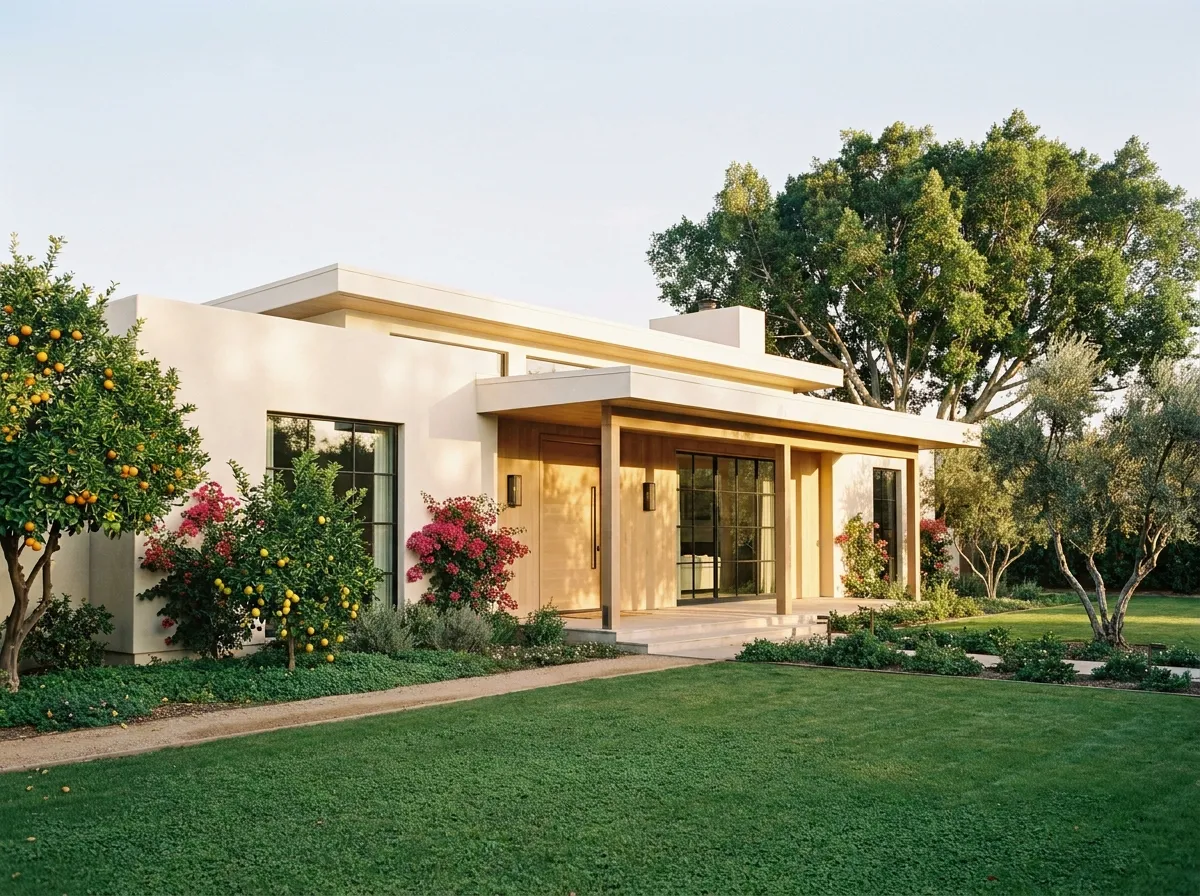
The number is always $50,000 or $60,000. It comes from whatever cost-of-moving calculator the homeowner found online, usually a real estate portal that has a financial incentive in the direction of moving. On a $1.3M Arcadia home, "5.5% in agent fees plus closing costs" does indeed get you to somewhere around $90,000. That number is real. It just represents about a third of what moving actually costs.
What the calculator leaves out: everything you spend before you list, the repair requests that come back from the buyer's inspection, the second full set of transaction costs on the home you're buying, the furniture that doesn't fit the new rooms, and — the largest item by a wide margin — the financial cost of surrendering a sub-4% mortgage in a 6.5%+ rate environment.
This is an exhaustive accounting of every dollar a move-up transaction in Arcadia costs in 2026. We'll anchor to a specific scenario — a family selling a $1.3M unrenovated 1955 ranch and buying a $1.95M renovated 2,450-sqft home a few streets east — and run every line item. The median total: $315,000 in year one, with a $7,337/month payment increase that continues for as long as they own the new home. The framework applies to any Arcadia move-up; adjust the home values and the numbers scale proportionally.
What happens before you list
A 1955 Arcadia ranch that's been lived in by a family for five to eight years will have a pre-listing to-do list. The scope of that list depends on condition, but the list is never zero. Buyers paying $1.3M in 85018 have seen enough renovated Arcadia homes to set a high bar, and a home that isn't showing at its best will receive offers priced at a meaningful discount to account for deferred maintenance.
Most listing agents will walk a home and produce a recommended pre-listing improvements list within the first 30 minutes. In ExpandEase's analysis of 156 Arcadia home sales from 2024–2026 [3], the median pre-listing spend landed at $34,000 — about 4× what most homeowners budget going in. Here's what that list typically contains for the 1955-era ranch archetype, calibrated to current contractor pricing in 85018.
| Item | Cost range | Notes |
|---|---|---|
| Roof inspection + minor repair (granule loss, flashing, vent caps, ridge cap) | $2,500–$7,500 | Pre-1975 homes nearly always surface at least $2K in deferred roof maintenance. A buyer's home inspector will flag everything; better to address it. |
| HVAC service + possible compressor replacement | $1,800–$9,500 | 1955-era homes that haven't had HVAC updates since 2010 often need a compressor or full system. A failed compressor at inspection is a $6K–$12K buyer credit conversation. |
| WDO (Wood Destroying Organism) inspection + treatment | $650–$4,200 | Arizona requires a WDIIR disclosure at close [1]. Treatment is buyer-negotiable, but sellers who address it proactively avoid the renegotiation entirely. |
| Exterior paint refresh (stucco patching + primer + paint) | $5,500–$14,000 | The homes that photograph best and command the strongest first-weekend offers in Arcadia have fresh exterior paint. Peeling stucco reads as deferred maintenance in photos. |
| Landscaping: irrigation inspection, palm trimming, front-yard refresh | $2,800–$7,500 | Arcadia buyers at $1.3M expect lush, irrigated landscaping. A dead palm or a patchy bermuda lawn is the first impression that sets a price ceiling. |
| Interior touch-up: paint, hardware, light fixtures, caulk, grout | $3,500–$8,500 | The biggest ROI per dollar in pre-listing work. Fresh paint in the main living areas and updated hardware on kitchen and bath cabinets photograph dramatically better. |
| Professional staging (furniture styling for lived-in home, key rooms) | $3,500–$7,500 | Full vacant-home staging runs $8K–$14K [2]. For a lived-in home, staging typically means a consultation, minor furniture repositioning, accessory updates in key rooms, and a rental piece or two. |
| Deep cleaning (windows, tile grout, oven, HVAC registers, ducts) | $900–$1,800 | Non-negotiable. The homes that smell and feel clean get the strongest offers in every price band. |
| Pre-listing inspection (optional but highly recommended) | $450–$750 | Paying for the inspection yourself before listing lets you control the narrative. Without it, the buyer's inspector is the first to surface issues — and they have an incentive to find them. |
| **Pre-sale subtotal** | **$21,600–$71,250** | The median for a 1955-era Arcadia home at mid-tier condition that's competing in the $1.3M tier is approximately **$34,000**, based on our project intake data [3]. |
Ranges reflect contractor quotes collected from licensed Maricopa County vendors in Q1 and Q2 2026. Higher end reflects homes with significant deferred maintenance; lower end reflects homes that have had recent partial updates. Arizona ROC license verification [4] is step one before any contractor engagement.
Selling the house: what it actually costs
Post-NAR settlement (effective August 2024), buyer-side and listing-side compensation are separately negotiated and no longer embedded in the MLS listing [5]. In practice, combined agent compensation in Arcadia has not dropped as dramatically as the post-settlement headlines suggested — 4.5%–5.5% combined remains the realistic range for listings in the $1M–$2M tier — but the line items have changed.
| Line item | Amount | Notes |
|---|---|---|
| Listing-side agent commission (2.5%) | $32,500 | Post-settlement: listing agent compensation is seller-negotiated. 2.0%–2.75% is the current Arcadia market range for full-service. |
| Buyer's agent commission (2.5%, negotiated/credited) | $32,500 | Sellers who choose not to offer buyer-agent compensation often receive lower offers; offering 2%–2.5% remains standard practice in the $1.3M tier [5]. |
| Title insurance (owner's policy, seller's side) | $4,200 | Owner's title policy in Arizona is traditionally paid by the seller in Maricopa County; rate varies by insurer and purchase price [6]. |
| Escrow fee (seller's half) | $1,800 | Escrow and settlement fees split between buyer and seller by convention in Maricopa County [6]. |
| Recording, transfer, and release fees | $450 | Arizona has no real estate transfer tax; recording fees apply to deed and any liens. |
| Seller concessions (buyer's inspection repair requests) | $8,000–$25,000 | In our project intake data, buyers of 1955-era Arcadia homes at the $1.3M tier submit repair requests averaging $14,500 [3]. About 40% of those requests are cash credits rather than repairs. |
| Home warranty (offered to buyer at closing) | $650–$1,100 | Common in this price tier; offsets buyer anxiety about the age of the mechanical systems. |
| Pro-rated property tax, HOA, and utility credits at close | $2,000–$4,500 | Depends on time of year and whether the home has an HOA (most Arcadia proper single-family does not). |
| **Sell-side transaction subtotal** | **$81,100–$100,950** | Median all-in for a $1.3M Arcadia home: approximately **$88,000** [3][6]. |
Buying the replacement home: the second set of costs
Every dollar above came from the sale side. But buying the replacement home — the 2,450-square-foot renovated ranch that triggered this move in the first place — costs another full round of transaction expenses. These arrive on the buy side and are often paid from the net proceeds of the sale, which is why they're easy to miss: they feel like part of the down payment, not a separate cost.
| Line item | Amount | Notes |
|---|---|---|
| Lender origination fee (0.5%) | $9,750 | On a ~$1.55M loan. Some lenders charge points instead; either way, origination is a real cost. |
| Appraisal | $800 | Residential appraisal, Maricopa County, luxury tier. |
| Lender underwriting, processing, and admin fees | $1,250 | Itemized on the Loan Estimate; varies by lender. |
| Title insurance (lender's policy) | $2,800 | Required by virtually all lenders for properties over $1M. |
| Escrow fee (buyer's half) | $1,800 | Same escrow fee split as on the sell side. |
| Home inspection on the new home | $650 | Non-optional. |
| Specialized inspections (pool, sewer scope, structure) | $800–$1,500 | Common on Arcadia homes; a sewer scope on a 1955 clay-pipe system is not optional in our view. |
| Pre-paid homeowner's insurance (first year) | $3,500–$5,500 | A $1.95M Arcadia home will run $3,500–$5,500/yr in HOI depending on pool, roof age, and claims history. |
| Pre-paid property tax reserve (2–5 months) | $6,500–$8,000 | Lenders require a reserve. Maricopa County property tax on a $1.95M home: approximately $14,000–$16,000/yr at the 2026 effective rate of 0.73% [7]. |
| Pre-paid interest (days 1–30) | $3,200–$4,500 | Charged from close date to end of month on the new loan balance. |
| Moving expenses (full-service: two adults, two kids, 4BR home) | $6,500–$9,500 | Full-service professional move in the Phoenix metro for a 2,500-sqft home with standard furnishings [8]. |
| **Buy-side transaction subtotal** | **$37,550–$45,350** | Median all-in: approximately **$40,000** [6][8]. |
What arrives 30–90 days after the move
There's a category of moving cost that almost never appears in pre-move estimates: the spending that occurs in the first 90 days in the new home. It's real, it's nearly universal, and for a $1.95M Arcadia home it tends to run $25,000–$55,000.
The universal driver: the rooms are different. Window treatments from the old house don't fit the new windows. The dining table is too small for the new dining room. The outdoor furniture doesn't match the new patio. The kids' rooms need new setups. None of this is optional in the timeline — it all happens within the first 90 days because living without window treatments in Arcadia summers is not a real plan.
| Category | Typical range | Notes |
|---|---|---|
| New window treatments (the new windows are different sizes) | $4,500–$11,000 | Custom shades or shutters on a 2,450-sqft Arcadia home with 8–12 distinct window configurations. |
| New or supplementary furniture | $12,000–$30,000 | The living room, dining area, and primary suite in a larger home almost always need supplementary pieces. The IKEA couch from the 1,500-sqft ranch does not fill the new great room. |
| New or supplementary kitchen items, small appliances, pantry setup | $1,500–$3,500 | Often overlooked. A bigger kitchen means a bigger pantry; the reorganization costs real money. |
| Landscaping in the new yard | $3,500–$12,000 | If the new home's yard isn't to the family's standard, the first summer forces the issue. Arcadia irrigation repairs alone average $2,500–$4,000. |
| Garage shelving, storage organization | $1,200–$3,500 | Almost every family does this in the first 60 days. |
| Miscellaneous (touch-up paint for scuffs, hardware upgrades, light fixtures) | $1,800–$4,500 | The "make it ours" spend that's impossible to zero out. |
| **Post-move subtotal** | **$24,500–$64,500** | Median for an Arcadia family moving into a home in the $1.8M–$2.2M tier: approximately **$36,000** in the first 90 days [9]. |
Ongoing costs that didn't exist before
The one-time costs stop when the new house feels settled — usually 3–6 months in. The ongoing cost increase, however, runs for as long as you own the home.
- Higher property taxes: +$5,500–$7,500/yr. The Maricopa County effective property tax rate is approximately 0.73% of Full Cash Value [7]. Going from a $1.3M FCV home to a $1.95M FCV home adds about $4,700–$6,200/yr in property taxes. These are not front-loaded at closing — they accrue starting at the next reassessment cycle.
- Higher homeowner's insurance: +$1,200–$2,400/yr. A $1.95M Arcadia home with a pool costs $4,500–$6,500/yr to insure vs. $3,000–$4,000/yr for the previous home [10]. The delta is real and recurring.
- Higher utility costs: +$1,800–$3,600/yr. A 2,450-sqft home uses meaningfully more electricity and water than a 1,500-sqft home. APS and SRP average electric bills scale roughly with square footage in the Phoenix metro; the summer HVAC bill alone for a 2,400-sqft Arcadia home is $280–$380/mo vs. $190–$240/mo for 1,500 sqft [11].
- Larger mortgage balance: the dominant ongoing cost. See the rate-delta section below.
The rate delta: the cost nobody advertises
Our Stay or Move: the real math piece works through the rate-delta calculation in detail. A family carrying a $402,400 mortgage at 3.125% that sells and takes out a new $1.55M mortgage at 6.5% (the Freddie Mac PMMS average for the week of May 8, 2026 [12]) experiences a monthly payment increase of approximately $7,337 — from $2,455/mo to $9,792/mo.
Over five years, that delta is $440,220 in incremental mortgage payments. Even accounting for slightly higher principal paydown on the new loan, the present-value cost of the rate differential is north of $350,000 over a 10-year horizon.
Running the full total for one Arcadia family
Here's what the complete bill looks like for the family selling a $1.3M Arcadia ranch and buying a $1.95M home in the same school district.
| Category | Low estimate | Median estimate | High estimate |
|---|---|---|---|
| Pre-listing spend (repairs, staging, landscaping) | $21,600 | $34,000 | $71,250 |
| Sell-side transaction costs (commission, title, escrow, concessions) | $81,100 | $88,000 | $100,950 |
| Buy-side transaction costs (origination, title, prepaids, moving) | $37,550 | $40,000 | $45,350 |
| Post-move spend (furniture, window treatments, landscaping, misc) | $24,500 | $36,000 | $64,500 |
| Subtotal — out-of-pocket cash costs | $164,750 | $198,000 | $282,050 |
| Forfeited rate-asset value (present value of mortgage rate differential) | $117,000 | $117,000 | $117,000 |
| **Total year-1 cost before ongoing payment increase** | **$281,750** | **$315,000** | **$399,050** |
| Ongoing monthly payment increase (rate delta) | +$5,200/mo | +$7,337/mo | +$9,100/mo |
| Ongoing annual overhead increase (taxes, insurance, utilities) | +$8,500/yr | +$11,500/yr | +$13,500/yr |
Rate-asset loss calculated at the median scenario: $402K balance at 3.125%, compared to a new $1.55M loan at 6.5% (Freddie Mac PMMS May 8, 2026 [12]). Present-value methodology in the Stay or Move piece. The "low" mortgage-delta scenario assumes existing mortgage rate of 4.5% and new rate of 6.5%; the "median" reflects the typical Arcadia lock-in cohort (3%–3.5% rates, 2020–2022 origination). The "high" reflects families with very large balances or particularly favorable existing rates.
The median all-in cost of this move in year one is approximately $315,000. The ongoing cost increase after year one is roughly $7,337/mo more in mortgage payment plus $11,500/yr more in taxes, insurance, and utilities.
When the move is worth it anyway
This piece is about the cost of moving, not an argument against it. There are situations where the cost is worth it — or where moving is simply the only solution.
- You're relocating. Period. If the move is cross-city or cross-state, none of this math applies. You're moving. The question is only whether to sell or rent the current home.
- The house can't be renovated to meet your needs. Setbacks, foundation issues, lot geometry, or a floor plan with no viable expansion path. Some Arcadia homes genuinely cannot be added onto. A site visit with a structural engineer before committing to either path is worth the $450.
- You've outgrown the neighborhood, not just the house. Schools, commute, proximity to family, noise. No renovation fixes a school district assignment or a 40-minute freeway commute.
- Your existing mortgage rate is already at or above market. If you refinanced or bought recently at 6%+, the rate-asset loss is minimal. The move-up math narrows considerably.
- The equity position requires sale to unlock. If you need the equity liquid — for business investment, a major life event, long-term care — renovation ties it up further. The right financial decision isn't always the lowest-cost housing decision.
The point of running the full cost is not to make selling look impossible. It's to make sure the decision is made with the real number, not the calculator number. $315,000 is a real number. It belongs in the decision.
If you want this math run against your specific address — your mortgage balance, your current rate, your equity position, and the ARMLS comps in your exact sub-zip — the Reality Check tool does it in about two minutes. Free, no credit check, and the result includes a renovation cost estimate alongside the transaction-cost comparison, so you can run both paths against each other with real numbers.